EN
EN


The panels are compliant with ASTM E136 standards as well as EN 13501-1 regulations, offering wall and roof applications fire resistance lasting around four hours. Most industrial buildings located in areas prone to fires have started specifying rock wool core materials to satisfy IFC Section 703 guidelines these days. Since these materials cannot catch fire themselves, there's no requirement for extra fireproof coatings which cuts down on expenses significantly. According to industry data from NFPA 2022, installation costs drop between roughly eighteen to forty two dollars per square meter when using this type of material instead of alternatives that require additional treatments.
In 2023 there was an electrical fire at a big logistics center in Texas covering around 12,000 square feet. The rock wool panels helped stop the heat from spreading to other parts of the building, which reduced the overall damage by about 72% when compared to similar buildings using EPS insulation instead. After the fire, inspectors checked what happened and found that even after being exposed to flames for almost an hour and a half straight, the structure didn't collapse at all. This really shows how good these materials are at stopping major destruction before it gets out of hand. And this matters quite a bit too since FM Global estimates that warehouses typically face over $740,000 in damages every year from fires alone.
The high density mineral wool core has a thermal conductivity rating around 0.035 W/mK which means it can cut down on HVAC energy consumption by somewhere close to 30%. When there's less heat moving back and forth between inside spaces and outside conditions, heating and cooling systems don't have to work so hard all the time. Looking at some recent studies from 2023, we see that warehouses insulated with rock wool materials actually saved about 24% on their yearly cooling expenses when compared against buildings without any kind of proper insulation installed.
Rock wool panels cover walls and roofs without leaving those annoying gaps or compression spots that plague regular insulation materials. What makes them stand out is how they stop thermal bridging cold, something that actually wastes around 15 to maybe 20 percent of heat in factories and warehouses. Another big plus? Their closed cell structure fights off moisture pretty well too. This means the insulation keeps performing at its best rating level even when humidity levels start creeping up, which matters a lot in places where dampness tends to be an issue.
Rock wool sandwich panels achieve U-values as low as 0.22 W/m²·K—58% more efficient than standard 225mm masonry walls (0.53 W/m²·K). In sub-zero climates, their non-directional fiber alignment maintains performance better than rigid foams, which are susceptible to cold-edge thermal drift.
By stabilizing internal temperatures with 80% less fluctuation, these panels help reduce Scope 2 emissions from HVAC systems. Recent case studies show that combining rock wool insulation with smart climate controls can lower carbon emissions by 6.2 metric tons annually per 10,000 sq. ft., supporting manufacturers pursuing ISO 50001 certification.
Rock wool sandwich panels deliver STC ratings of 45–50, blocking up to 90% of airborne noise in industrial settings. Their dense core (60–150 kg/m³) attenuates sound across critical machinery frequencies (125 Hz to 4000 Hz), outperforming standard masonry walls by 8–12 decibels, as demonstrated in STC 45-rated industrial partitions.
The interlocking fiber matrix converts sound energy into heat through friction, achieving noise reduction coefficients (NRC) of 0.90–0.95. This structure effectively dampens:
Prolonged exposure to 85 dB environments reduces cognitive accuracy by 28% and increases fatigue-related errors by 19% (Ponemon 2023). Facilities using rock wool panels report significant improvements:
| Communication clarity | 42% improvement |
| Shift-long focus | 35% longer sustained |
| OSHA compliance rate | 98% vs 73% industry average |
By maintaining ambient noise below 70 dB, these panels support safer, more productive workspaces where verbal communication remains clear and mental fatigue is reduced.
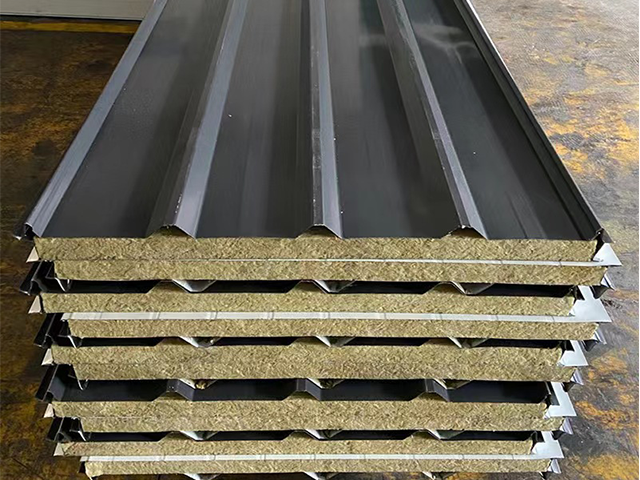
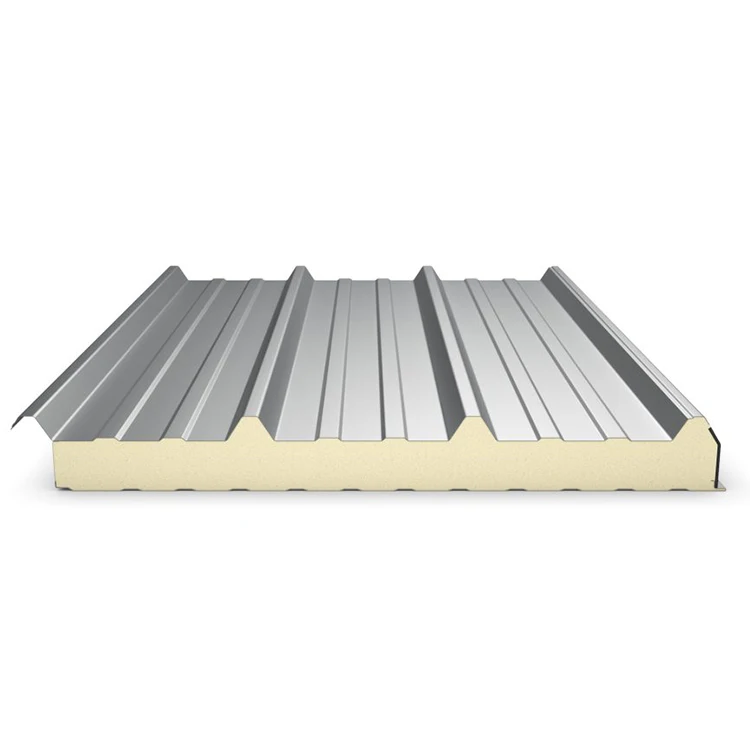
Rock wool sandwich panels combine strong steel faces with a thick mineral wool center. They can handle loads above 1.5 kilonewtons per square meter but still weigh just around 15 to 20 kilograms per square meter. The good strength compared to their weight means these panels work great for big roof spans and systems supported by cranes. Contractors find they save money when installing things like mezzanine floors, conveyor belts, or other heavy machinery because there's no need for major structural changes to buildings. This balance between strength and lightness has made them popular choice across many construction projects where weight matters but durability is essential.
These panels are built tough enough to handle winds blowing at speeds of around 150 miles per hour plus earthquakes too. They stay put even when subjected to constant mechanical stress from heavy equipment like cranes and forklifts running back and forth all day long. Plus they work just fine whether it's freezing cold at minus 40 degrees Celsius or sweltering hot at plus 80 degrees. Some independent testing has looked at how they perform dynamically, and what researchers found was pretty impressive actually - about 40 percent less vibration gets transmitted through these panels compared to regular concrete walls. That kind of performance makes them really good choice for places where manufacturing needs to be super precise without any unwanted shaking messing things up.
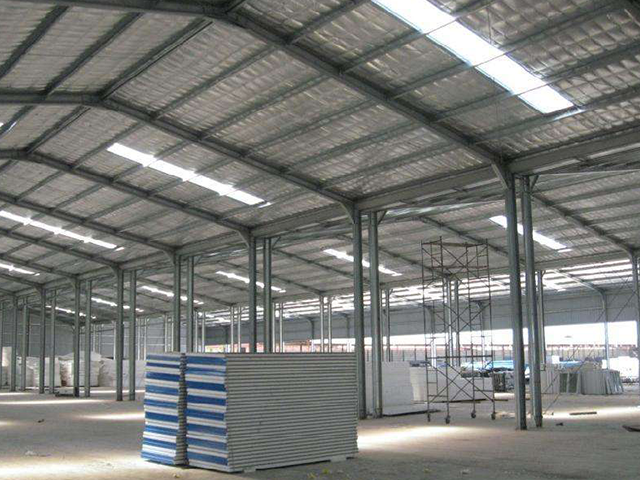
Prefabricated with pre-punched lifting slots, rock wool panels enable crane-assisted installation rates of 800–1,200 m²/day. One 2023 warehouse project achieved a 30% faster build time compared to traditional framing, with crane usage dropping from 14 to 6 days thanks to standardized panel sizes (up to 16m) and interlocking joints.
These panels have galvanized steel on the outside and mineral wool inside that doesn't soak up moisture, making them pretty tough against water damage even in rough conditions. The special zinc aluminum coating cuts down on rust problems by about 78% when things get really humid according to some tests from last year's Steel Durability Report. That means they last much longer in places like seaside factories where salt air gets everywhere, meatpacking plants with all that steam, or warehouses storing chemicals where there might be fumes floating around.
A 2022 distribution center used prefabricated rock wool panels to complete a 50,000 sq.ft cold storage facility 30% faster than brick-and-mortar construction. Interlocking, crane-mounted panels achieved weather-tight enclosure in just 11 days, minimizing thermal bridging risks while maintaining internal temperatures down to -22°F (-30°C).
Industry adoption of rock wool panels in modular construction has risen 40% since 2022 (2024 Modular Construction Trends Report). Pre-insulated, demountable designs allow scalable expansion without compromising thermal or acoustic performance. One automotive parts supplier cut its carbon footprint by 18% using reconfigurable rock wool walls that eliminate material waste during facility upgrades.
 Hot News
2025-02-28
2025-02-28
2025-02-28

We are a steel structure processing plant in China for many years, we provide one-stop solutions, from procurement, processing, to transportation, installation and other links can be solved for you.