EN
EN


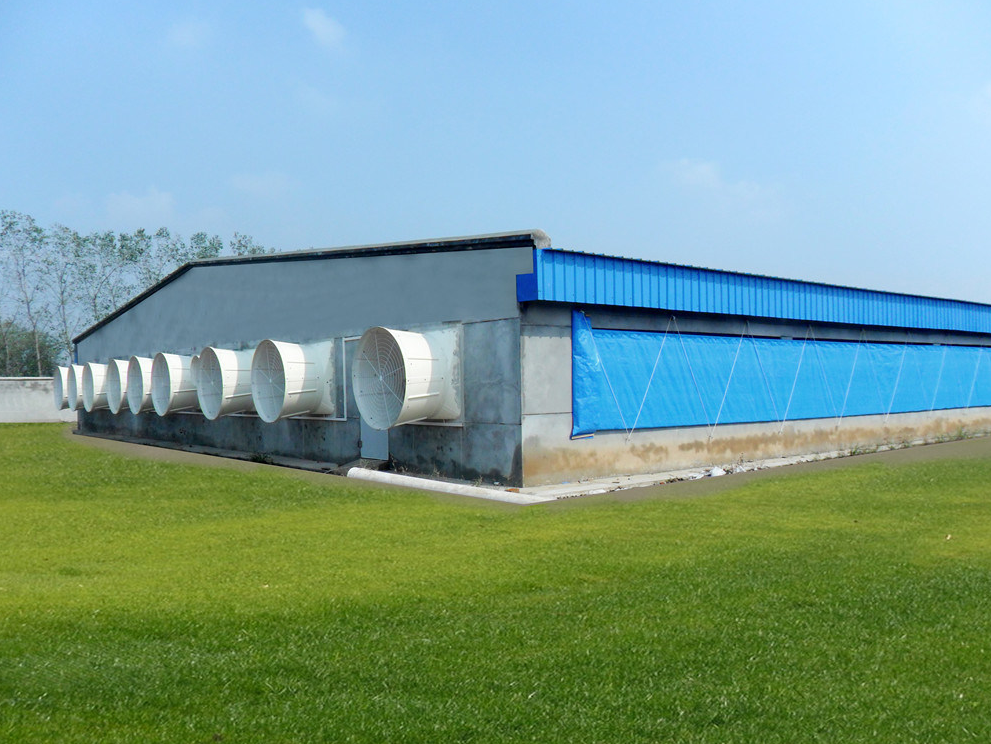
Designing Effective Ventilation Systems for Prefab Chicken Houses
Impact of prefab chicken house geometry on airflow: ridge vents, ceiling height, roof slope, and reflective material color
The way buildings are shaped has a big impact on how well they ventilate in prefabricated chicken houses. Ridge vents act as important exits for hot air that rises naturally. When ceilings go above about seven feet tall, this helps create better airflow patterns and keeps chickens from getting too hot. Most experts recommend slopes between twenty five and thirty degrees for roofs because it works pretty well for both keeping water off and letting air move properly along the top ridge. White reflective roofing can make a real difference too. These materials bounce back sunlight instead of absorbing it, so inside temperatures stay around 30 degrees cooler than with darker options. This matters a lot since poultry needs to stay within roughly 18 to 25 degrees Celsius for good health and overall wellbeing.
Roof vs. sidewall inlet integration in steel-frame chicken house builds
The steel frame design makes it possible to install inlets exactly where needed, which helps create specific airflow patterns throughout the building. When we put inlets on the roof, they mix air vertically and help keep temperatures consistent at different levels where birds are located. For sidewall installations, the airflow moves horizontally, which works better when controlling humidity and stopping condensation problems. Studies indicate that getting the inlet size right keeps air moving at around 600 to 800 feet per minute. This speed range prevents uncomfortable drafts while still allowing good air circulation. Farmers in areas with lots of moisture have found that using both sidewall inlets and ridge or tunnel exhaust systems cuts down condensation issues by about 40% compared to just having roof vents. The combination creates better airflow across the entire space and removes excess moisture much more effectively.
Sizing Ventilation Equipment for Ammonia, Humidity, and Air Quality Control in Chicken Houses
CFM requirements per bird across broiler growth stages and density-adjusted ventilation rates
Getting ventilation right is all about matching it to how fast the birds are growing and how many we put in each space. The air flow requirements jump quite a bit as the chickens get older too. We start off needing about half a cubic foot per minute per kilogram for those tiny day old chicks, but by the time they're ready for market, we're looking at around 7.5 CFM per kg. The number of birds packed into a house makes a difference too. If we have 30 kg of birds per square meter instead of just 25, then we need roughly 20% more fresh air moving through to keep ammonia levels down. Farmers really need to adjust these settings on a weekly basis. When they forget to bump up the airflow as the birds grow bigger, problems tend to happen. Last year's industry reports showed that farms not adjusting properly saw about 15% more cases of respiratory issues among their flocks.
Static pressure calibration and AMCA-certified fan selection for consistent chicken house air quality
Fans certified by AMCA actually perform as advertised when facing real world static pressures between around 0.05 and 0.15 inches water gauge. Uncertified models often struggle badly, sometimes losing nearly half their efficiency at just 0.1 inch WG. Getting good air quality really comes down to getting things right during setup. The fan curve needs to match what's happening in the ductwork and at the inlet points. Exhaust fans should be placed within 60 feet of each other maximum, and those inlet air speeds need checking with proper instruments to make sure they're hitting that sweet spot of 0.8 to 1.0 meters per second. When all these steps are followed properly, it stops those dead spots from forming where ammonia levels might spike above 25 parts per million. And we know from testing that when ammonia crosses this level, animals tend to gain weight 12% slower than normal.
Seasonal Ventilation Strategies for Prefab Chicken Houses
Tunnel and longitudinal ventilation for summer heat mitigation
As temperatures climb above around 32 degrees Celsius or 90 Fahrenheit, proper tunnel ventilation is really important for livestock management. Most setups use exhaust fans at one end of the tunnel combined with evaporative cooling pads on the opposite wall to create strong airflow moving at about 2 to 3 meters per second. This creates a cooling effect that makes animals feel several degrees cooler, cutting down on heat stress issues. Longitudinal ventilation works hand in hand with this system by spreading air evenly across the space using side wall openings and roof level exhausts. This prevents uncomfortable cold spots while keeping fresh air circulating throughout. When implemented together, these ventilation methods can cut down on deaths from heat by roughly 12 to 18 percent and help maintain good feed efficiency rates. The evaporative cooling component actually cools incoming air by an additional 5 to 8 degrees Celsius as water changes from liquid to vapor state. But this only works well when the surrounding air isn't already too humid, ideally staying under 60% relative humidity for best results.
Winter condensation prevention and frostbite risk reduction through balanced inlet–exhaust control
Proper ventilation during winter months focuses mainly on getting rid of excess moisture while still keeping things comfortable inside. Systems that create balanced negative pressure typically work between 0.05 and 0.1 inches of water gauge pressure. These systems blend the cold air coming in with the warmer air near the ceiling before letting it down to floor level. This helps avoid those annoying drafts people complain about and keeps humidity levels under control, ideally below 70%. When humidity stays low like this, it actually stops ammonia from building up in the litter. For poultry houses, we generally aim for around 0.1 to 0.2 cubic feet per minute of fresh air per bird. This amount removes enough moisture but still maintains indoor temps above 15 degrees Celsius. Smart inlet dampers automatically change how much they open depending on what's happening outside. They help spread air evenly across wall surfaces and get rid of those spots where condensation tends to form. Farmers who implement these methods report seeing frostbite cases drop anywhere from 22% to 30% when temperatures really dip below freezing. Plus, there's another benefit: energy bills go down about 15% to 18% because the system captures heat from the air being exhausted out.
Hybrid and Natural Ventilation Options for Energy-Efficient Chicken House Operation
Hybrid ventilation combines natural airflow with mechanical help and can cut energy costs around 30% without sacrificing air quality standards. The natural part works through things like ridge vents, those openable side walls, and buildings positioned just right to catch the wind and take advantage of temperature differences. This approach tends to work best in places where temperatures aren't too harsh and there's not much moisture in the air. When the weather gets still or really bad, variable speed fans kick in to keep the air moving at the right rate measured in cubic feet per minute. Some research published in Poultry Science back in 2023 showed that these hybrid systems managed to hit their humidity goals below 60% relative humidity while running fans only about 24% as long as traditional all-mechanical systems would need.
| Ventilation Type | Best-Suited Climate | Key Energy Advantage |
|---|---|---|
| Natural | Temperate, low-humidity | Zero electrical consumption |
| Hybrid | Variable/extreme | Adaptive fan modulation cuts peak demand |
The success of natural ventilation really depends on where we place those prefab houses in relation to wind directions and how the sun moves through the seasons. This is where hybrid systems come in handy. They solve many of these problems by using automatic controls for air intakes and fans that work in stages. These systems manage airflow effectively while keeping ammonia levels under control at around 25 parts per million. When building something new from scratch, it makes sense to include all these elements right from the start during design. That way, everything works together properly – insulation materials match up with how air comes in through different shaped openings, and fans kick in at just the right times. Such planning helps prevent moisture buildup inside during cold months and keeps temperatures comfortable even when outside hits over 32 degrees Celsius in summer.
Table of Contents
- Designing Effective Ventilation Systems for Prefab Chicken Houses
- Sizing Ventilation Equipment for Ammonia, Humidity, and Air Quality Control in Chicken Houses
- Seasonal Ventilation Strategies for Prefab Chicken Houses
- Hybrid and Natural Ventilation Options for Energy-Efficient Chicken House Operation