EN
EN


Core Quality: Assess Rock Wool Density, Fire Performance, and Hydrophobicity
Density (≥100 kg/m³), Fiber Diameter, and Shot Content for Structural Integrity
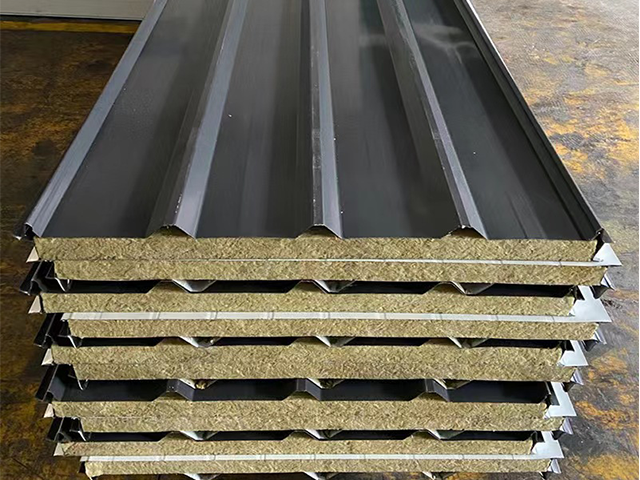
The foundation of good structural integrity lies in maintaining a core density no less than 100 kg per cubic meter. This basic requirement helps the material hold up under weight and resist compression when vibrations occur. When it comes to fibers, we're looking at diameters between 4 to 7 micrometers for maximum tensile strength. Too many non-fibrous particles, what industry folks call shot content, creates weak spots in the structure. Keeping this below 5% is crucial for consistent performance across different applications. Panels that are too light tend to bend and warp under normal working conditions, which leads to faster heat transfer issues. According to EN 826 standards, quality materials will deform just around 2% when subjected to 40 kilopascals of pressure. Compare that to poor quality cores which can show up to 10% deformation under similar conditions, making them unreliable for most construction needs.
Class A1 Non-Combustible Rating and Thermal Conductivity (≤ 0.040 W/m·K)
When it comes to fire safety, there's simply no room for compromise. The panels need to hit Class A1 non-combustibility standards according to EN 13501-1, which basically means they won't contribute any fuel when exposed to flames. Getting this certification involves passing several tests including maintaining structural strength for more than four hours straight, keeping flame spread under control with an index number no higher than 5 as per ASTM E84 standards, and limiting smoke production to less than 50 on the NFPA 258 scale. At the same time, these materials should have thermal conductivity ratings equal to or better than 0.040 W/mK so they resist heat transfer effectively. Buildings that install panels satisfying all these requirements typically see their heating and cooling costs drop between 18% and 30%. We've actually seen this happen in numerous real world retrofit projects across different climates and building types.
Water Repellency (>98%), pH Neutrality, and Low Organic Content for Corrosion Resistance
For hydrophobic treatments to work properly in places like coastal areas or humid environments, they need to repel at least 98 percent of water according to ASTM C1511 standards. This isn't just about preventing water from being absorbed either. The pH level needs to stay around neutral between 6.5 and 7.5 while keeping organic materials below one percent to avoid any problems with electrochemical corrosion on steel surfaces. We've seen field tests where untreated cores soak up fifteen times more water than treated ones, which leads to rust developing and insulation losing effectiveness after just five years of exposure. According to EN 12088 guidelines, it's important to rely on actual third party testing rather than what suppliers say when checking if something is truly hydrophobic. Even if a material performs well under normal conditions, extra protection through vapor barriers should always be specified in regions with consistently high humidity levels.
Panel Construction: Evaluate Joint Design, Surface Bonding, and Dimensional Stability
Tongue-and-Groove Integration and Edge Sealing for Air-Tightness and Moisture Exclusion
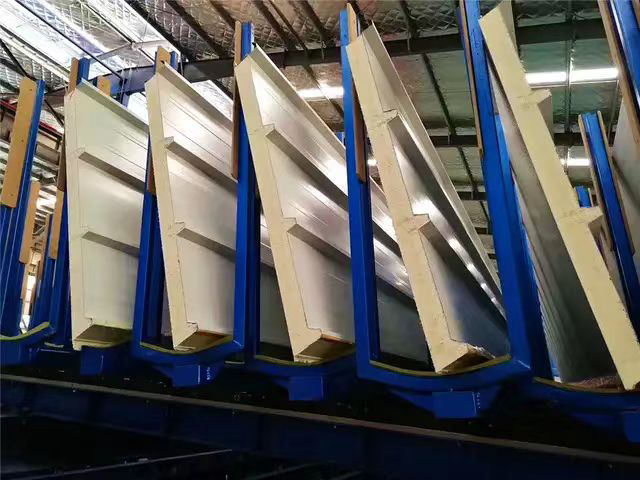
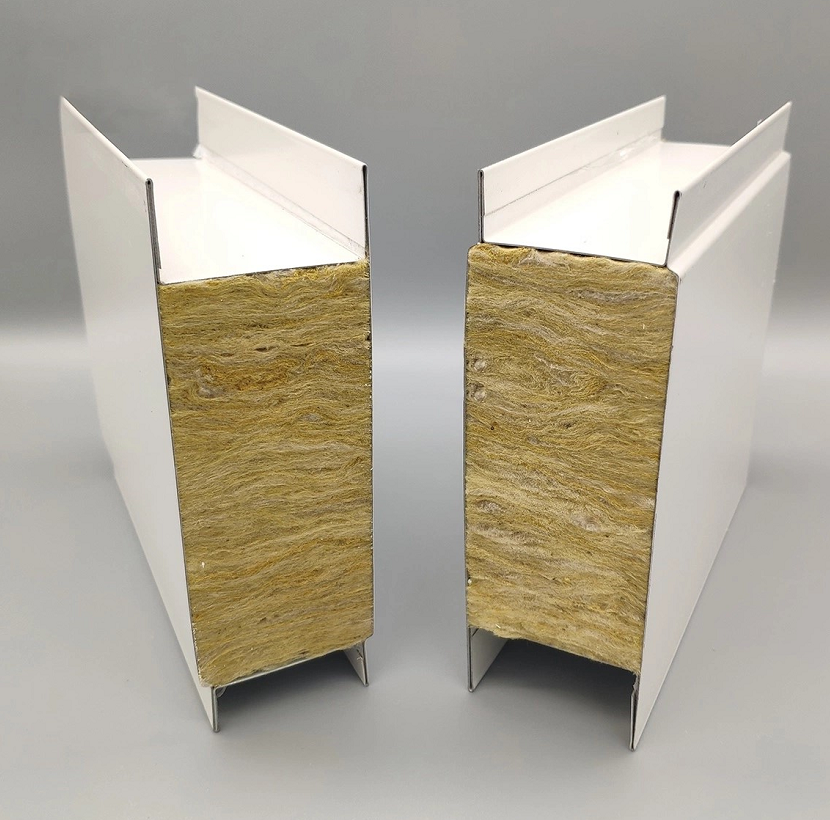
The tongue and groove design helps keep those annoying gaps from forming between rock wool sandwich panels, creating a solid barrier against both heat loss and air infiltration. Combine this with some good quality butyl based edge sealant and we're talking about air leakage rates below 0.1 cubic meters per hour per square meter at 50 pascals according to EN 12114 standards. Getting that kind of tight seal matters a lot when it comes to stopping moisture problems caused by condensation. Even with those super water repelling cores that claim to have over 98% repellency, they still need proper sealing around the edges to work right. Real world testing has actually shown that when installers take the time to properly seal these joints, there's about a 70% reduction in condensation risks compared to just using standard square edged panels without any special sealing.
Steel-to-Core Adhesion Strength, Flatness Tolerance (<1 mm/m), and Corrugation Consistency
Steel facings must bond to the core with a minimum peel strength of 4 kN/m, tested per EN 14509, to resist delamination during thermal cycling or mechanical stress. Uniform adhesive application ensures consistent stress transfer across the panel surface. Production controls maintain dimensional stability via:
- Flatness tolerance <1 mm per linear meter
- Corrugation depth variation ≤ ±0.3 mm
- Camber deflection < L/500 for 10 m spans
Panels meeting these tolerances exhibit 40% less warpage across temperature extremes (–30°C to 80°C). Third-party adhesion assessments provide objective validation beyond manufacturer declarations.
Verification & Procurement: Prioritize Certifications, Traceability, and Real-World Validation
Mandatory Certifications: EN 14509, GB/T 23932, CE, and FM Global for Rock Wool Sandwich Panel Compliance
Getting certified isn't just something nice to have these days it's basically proof that things actually work as claimed. Take EN 14509 for instance this one checks how materials hold up when put under stress or exposed to fires. Then there's GB/T 23932 which looks at whether dimensions stay stable after going through temperature changes back and forth. The CE mark means products meet all those EU rules about health safety and environment stuff. And don't forget FM Global certification especially important for buildings in risky areas because it proves they can withstand strong winds and contain fires after being checked by third parties. Keeping track of where materials come from matters too. That's why we need those mill test reports and material certs they're required documents to know exactly what went into construction and avoid legal headaches later on. Looking at recent studies from 2023 shows just how bad things get when builders skip certifications. Projects that used uncertified panels had almost 38% more problems with their performance down the road.
On-Site Validation: ASTM C1338 Hydrophobicity Testing, Small-Batch Trials, and Thermal Imaging
Laboratory certifications require field verification. ASTM C1338 testing confirms water absorption remains <1.5%, directly validating hydrophobicity claims before installation. Small-batch trials assess practical performance:
- Joint sealing effectiveness and installation efficiency
- Handling durability and edge deformation under site conditions
- Real-world thermal bridging via infrared thermography
Thermal imaging detects temperature inconsistencies >0.5°C/m², exposing insulation gaps invisible in factory inspections. According to the 2024 Construction Quality Journal, such trials reduce installation errors by 44% versus specification-only procurement. Always complete validation before full-scale deployment.