EN
EN


What Are EPS Sandwich Panels and How Do They Work?
Core Composition: Expanded Polystyrene (EPS) in Structural Context
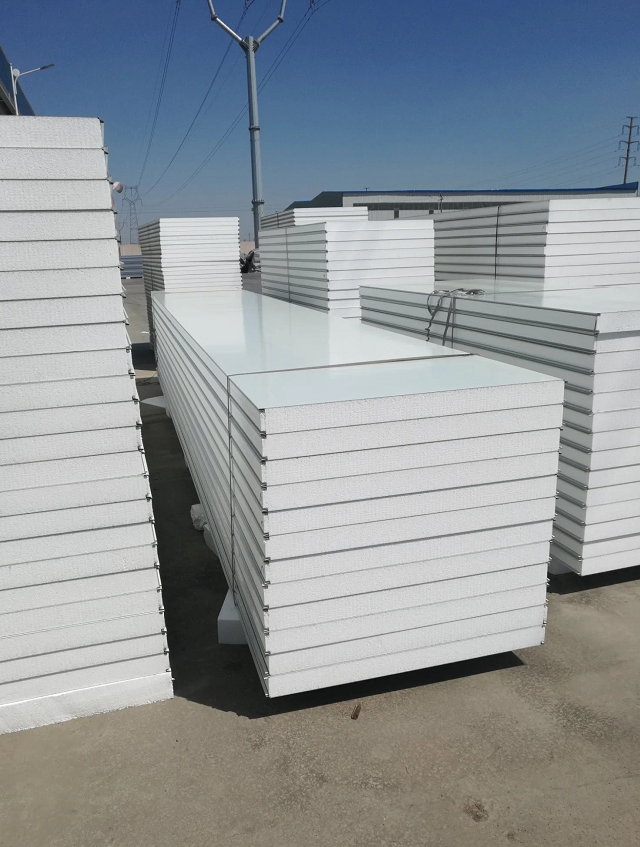
The heart of EPS sandwich panels is Expanded Polystyrene, which gives them their light weight and impressive performance characteristics. What's interesting about EPS is that it contains around 98% trapped air inside those closed-cell foam beads. Because of this, it can handle pretty decent compressive forces ranging from 15 to 30 psi even though the material itself weighs just 1.5 pounds per cubic foot or roughly 24 kilograms per cubic meter. The way these cells are arranged helps spread out pressure across the panel's outer layers, so they don't bend or warp when subjected to static loads of up to 5,000 Pascals. Plus, EPS doesn't soak up much water at all less than 1% by volume which means it keeps performing well thermally whether it's freezing cold at minus 50 degrees Celsius or sweltering hot at 70 degrees. With an R-value consistently between R-3.5 and R-4.5 per inch, EPS has become a go-to material for constructing buildings that need to maintain good energy efficiency without sacrificing structural integrity.
Panel Construction: Facings, Bonding, and Thermal/Acoustic Mechanisms
When steel or aluminum sheets get attached to the expanded polystyrene (EPS) core with continuous lines of structural polyurethane adhesive, they form what's basically a single solid composite material. Each layer plays its own part mechanically speaking. The outer layers handle tension and compression forces pretty well, while the inner EPS core takes care of absorbing shear stress and keeping everything spaced properly apart dimensionally. From a thermal standpoint, those tiny air pockets inside the EPS really help reduce how much heat gets conducted through the material. Panels that are around 100 mm thick can achieve U-values down to about 0.22 W/m²K. Sound-wise, the EPS has this viscoelastic property that actually turns sound waves into very little heat energy, which means these panels typically have Noise Reduction Coefficients ranging between 0.6 and 0.75. Tests show that when exposed to wind pressures above 1.5 kPa, the bond holds strong enough to maintain those critical air gaps for decades, often lasting well beyond 30 years without significant performance loss.
Key Performance Benefits of EPS Sandwich Panels
Thermal Insulation Efficiency and Energy Savings
EPS sandwich panels have thermal conductivity around 0.032 to 0.038 W/m·K which means they cut down heat transfer quite effectively compared to standard wall systems. Research indicates buildings equipped with these panels typically see between 30% and 50% reductions in energy needed for heating and cooling. This is particularly noticeable in places where temperature control matters most, such as refrigerated warehouses. What makes EPS so reliable is its closed cell structure that keeps insulation properties intact throughout all seasons. Indoor temperatures stay consistent over time because the material doesn't break down when exposed to repeated temperature changes or varying levels of moisture in the air.
Lightweight Strength and Load-Bearing Capacity
EPS panels weigh approximately 70% less than equivalent concrete assemblies, yet deliver exceptional structural performance through their composite design. Rigid steel or aluminum facings provide tensile strength and stiffness, while the EPS core contributes shear resistance and spacing—yielding an industry-leading strength-to-weight ratio. This enables:
- Roof spans up to 6 meters without intermediate supports
- Rapid installation with minimal heavy equipment or reinforced foundations
- Lower transportation costs and simplified on-site handling
These attributes make EPS panels particularly well-suited for prefabricated and modular construction, where speed, logistics efficiency, and structural reliability are paramount.
Fire Resistance, Moisture Management, and Durability
EPS sandwich panels today come with special fire retardants that slow down how quickly they catch and spread flames. When built right into walls or roofs, these panels can hold off fire for as long as two whole hours. The material itself doesn't absorb much water at all, less than 1% actually, which means no worries about rust forming, mold growing, or the insulation losing its effectiveness over time. Independent labs have tested these panels extensively too. They survived dozens of freeze-thaw cycles without cracking, held up under near constant humidity conditions, and even passed tests where they were hit hard to simulate what happens during bad storms. This kind of durability makes them a smart choice for buildings in all kinds of climates.
| Performance Metric | EPS Panel Capability | Industry Standard |
|---|---|---|
| Service Life | 40+ years | 25 years |
| Moisture Resistance | 0.7% water absorption | 3% maximum |
| Thermal Retention | >95% after 20 years | 80% minimum |
This combination of passive durability and environmental resistance ensures low-maintenance operation across diverse climatic zones—from arid deserts to coastal high-humidity regions.
Common Applications Across Commercial and Industrial Sectors
Cold Storage Facilities and Refrigerated Logistics
Expanded polystyrene sandwich panels have become pretty much standard for keeping things cold in storage facilities these days. We're talking everything from those super cold pharmaceutical freezers running at minus 30 degrees Celsius all the way up to regular chilled warehouses around 10 degrees above zero. These panels really do cut down on energy consumption compared to older methods like traditional insulated metal panels or even brick walls. Studies show somewhere between 25% to 40% less power needed. What makes them work so well? The moisture resistant coatings they come with, think prepainted galvanized steel, stop condensation from forming inside where it shouldn't be. Condensation is actually one of the main problems causing rust and peeling panels in places where humidity levels run high in refrigerated spaces. And when panels stay intact longer, products stored there remain safe and secure while the building itself lasts much longer too.
Prefabricated Buildings and Modular Construction
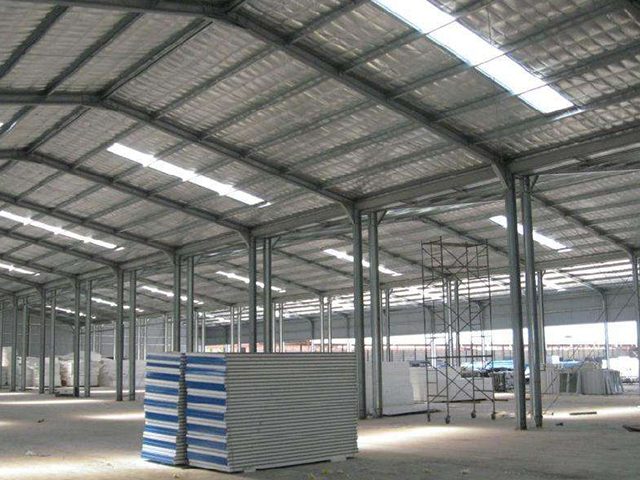
EPS panels are light yet strong, which makes them great for getting industrial warehouses up quickly, setting up temporary medical facilities, or building disaster relief shelters when time is critical. These panels can span spaces up to 6 meters wide without needing extra framing structures. Manufacturers report that this cuts down on materials needed by around 15 to 30 percent and can shave almost half off construction schedules based on real world installations. The clip lock system means workers can put things together fast without tools, saving both time and money. For safety requirements, there are versions treated with fire retardants that meet most international standards including the EN 13501-1 classification for Class B-s1,d0 fire reaction. This compliance helps ensure these structures pass inspections and stay safe in commercial settings.
How to Select the Right EPS Sandwich Panel for Your Project
Evaluating Thickness, Density, Facing Material, and Certifications
Optimal panel selection hinges on four interdependent specifications:
- Thickness: Directly determining thermal performance - for example, 100mm panels typically provide R-3.5 to R-4.2 square meters · K/W, while sub zero cold storage typically requires cores of over 150mm.
- EPS Density: The range is from 12kg/m ³ (non load bearing partition wall) to 30kg/m ³ (structural roof), and the higher the density, the higher the compressive strength can be increased by 40%.
- Facing Material: Galvanized steel offers superior corrosion resistance in humid or coastal settings; aluminum excels in chemical-exposure zones due to its inert surface.
- Certifications: Always verify compliance with EN 14509 (self-supporting double-skin metal-faced panels), EN 13501-1 (fire classification), and ISO 9001 (quality management). Panels lacking these certifications may incur up to 25% higher operational energy costs, particularly in climate-controlled facilities.
Comparing EPS vs. PIR, PU, and Rock Wool Alternatives
When evaluating insulation cores, EPS delivers a uniquely balanced value proposition:
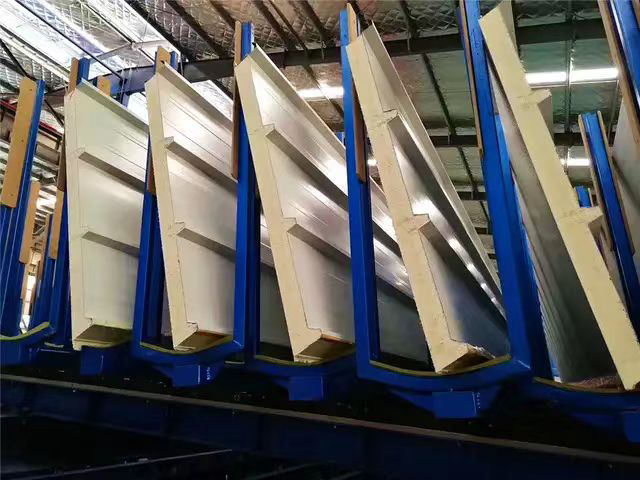
- PIR (Polyisocyanurate) Provides slightly better thermal conductivity (0.022-0.028 W/m · K) and a 0-level fire rating, but at almost twice the cost and with reduced long-term dimensional stability.
- PU (Polyurethane) It matches the insulation performance of EPS, but degrades under ultraviolet irradiation and exhibits greater thermal drift over time.
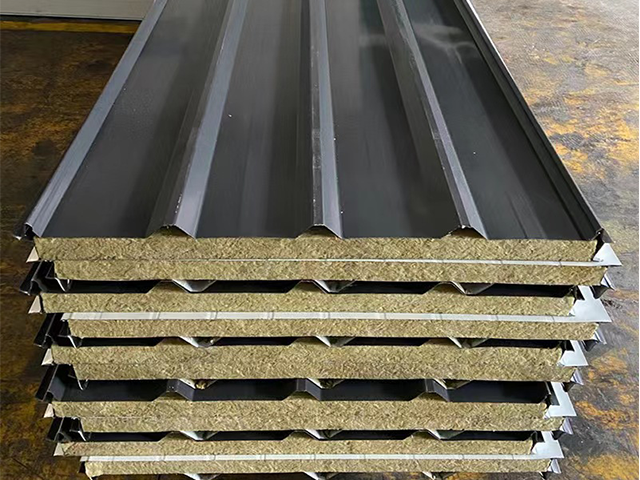
- Rock Wool Provides unparalleled fire safety (1000 ° C tolerance) and acoustic performance, but weighs 3 pounds more than EPS, increasing structural framing, transportation, and labor costs.
For projects that prioritize cost-effective thermal efficiency (<0.04 W/m · K), moderate fire resistance (B-S1 grade, d0), and lightweight logistics, EPS remains the most widely designated and field validated solution, supported by decades of real-world performance data and global standard compliance.